Faith Leaders Call for Peaceful 2027 General Elections.
By Erick Mbogo Githuku
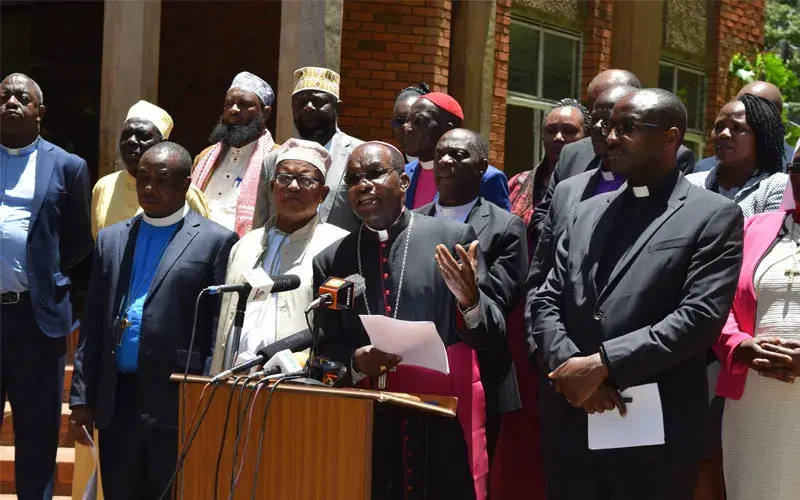
Religious leaders in Kenya are intensifying calls for decisive choices that will safeguard democracy and peace as the country heads toward the 2027 General Elections. Speaking at the opening of the National Stakeholders Convention (NSC) at Ufungamano House, newly elected National Council of Churches of Kenya (NCCK) chairman Dr. Elias Otieno Agola reminded delegates that the future of the nation rests on decisions made today. “The Kenya we shall have in and after 2027 will in large measure depend on the decisions we make today,” he said.
The convention, which brings together the Kenya Religious Leaders Forum (KRLF) — including the Kenya Conference of Catholic Bishops (KCCB), Evangelical Alliance of Kenya (EAK), SUPKEM, and NCCK — is designed to assess the readiness of constitutional bodies to deliver credible elections and to develop strategies that ensure peace and stability throughout the electoral cycle.
Challenges Facing Democracy
Faith leaders highlighted several challenges that could undermine Kenya’s democratic process:
Division and Lack of trust among communities, often fueled by divisive political rhetoric.
Weak institutional capacity in electoral bodies, raising concerns about transparency and credibility.
Youth disillusionment, with many young Kenyans feeling excluded from decision‑making.
Violence and insecurity, historically linked to contested polls.
These challenges, they argued, must be addressed now rather than left to escalate during the election season.
Solutions Proposed
The religious leaders are not only sounding alarms but also offering practical solutions:
Strengthening Institutions
The convention urged the Independent Electoral and Boundaries Commission (IEBC) to prioritize transparency in voter registration and results transmission.
Faith groups pledged to monitor electoral processes and provide independent oversight to build public trust.
Peace Committees
KRLF announced plans to establish grassroots peace committees in counties most prone to electoral violence.
These committees will mediate disputes, promote dialogue, and counter inflammatory rhetoric before it escalates.
Civic Education
Religious leaders committed to using pulpits, mosques, and community gatherings to educate citizens on their rights and responsibilities.
The goal is to empower voters to make informed, decisive choices that strengthen democracy rather than weaken it.
Youth Engagement
Recognizing the power of Kenya’s youthful population, the NCCK and EAK pledged to launch mentorship programs that encourage young people to participate constructively in politics.
By giving youth a voice, leaders hope to reduce apathy and prevent manipulation by political elites.
Interfaith Collaboration
SUPKEM and KCCB emphasized that unity across faiths is essential to safeguard peace.
Joint statements and coordinated action will ensure that no community feels isolated or targeted during the electoral cycle.
Looking Ahead
The two‑day convention is expected to produce a roadmap for peaceful and credible elections, with recommendations submitted to constitutional bodies and the government. Religious leaders stressed that their role is not partisan but moral — to remind Kenyans that democracy thrives only when citizens act responsibly and institutions remain accountable.
Dr. Agola summarized the urgency: “Our faith compels us to defend democracy. We must choose leaders who value peace, justice, and service. The alternative is chaos, and Kenya cannot afford chaos in 2027.”
As the country prepares for the polls, the message from Ufungamano House is clear: decisive choices today will determine whether Kenya’s democracy emerges stronger or falters under pressure.
Featured Article.


Comments